Walk into almost any classroom in the world and you will find something remarkable.
A skilled teacher is guiding a group of students through challenges, discoveries, frustrations, and breakthroughs. Every day, thousands of small decisions are made: How to explain a difficult concept, how to re-engage a distracted learner, how to support a student who is struggling, how to unlock a moment where something finally clicks.
These moments are valuable. They are experience, experimentation, and learning in its purest form. Yet almost none of this knowledge ever leaves the room.
Education is one of the largest and most important human endeavors, and it remains surprisingly fragmented and siloed. Classrooms operate largely as isolated units. Teachers collaborate with colleagues when they can, attend professional development, and share resources through informal networks. But the vast majority of insight generated inside classrooms is never captured, connected, or shared at scale.
As a result, the same challenges are solved repeatedly by different teachers in different places. A teacher in Copenhagen finds an effective way to reach reluctant readers. A teacher in New Orleans develops a strategy for managing mixed-ability groups. A teacher in São Paulo lands on a breakthrough approach to teaching fractions. Each of these solutions emerges independently, often with no awareness that someone, somewhere, has already faced and solved the same problem.
In education, millions of people are answering the same questions over and over, as if for the first time. This is not because teachers fail to collaborate. It is because the infrastructure for collective learning has never really existed.
The untapped intelligence of classrooms
Imagine if every classroom contributed to a shared pool of educational intelligence. Imagine if the experience of millions of teachers could be connected, analyzed, and made available to any educator at the moment they need it.
When a teacher hits a wall, they would no longer rely solely on their own experience, a small local network, or a generic internet search. They could draw on patterns, insights, and approaches that have worked across thousands of classrooms facing similar circumstances.
The question would shift from:
“How do I solve this problem?”
to:
“How has the global teaching community already learned to solve this problem?”
That is the promise of networked educational intelligence.
From isolated expertise to collective intelligence
Other fields have already made this shift. Navigation systems learn from millions of drivers. Recommendation engines improve through the behavior of millions of users. Large-scale systems learn patterns from vast amounts of data and hand the guidance for navigating those patterns back to individuals in real time.
Education, despite being fundamentally about learning, has lacked any comparable mechanism for learning about itself.
Teachers build extraordinary expertise over a career. Yet most of it stays local, personal, and difficult to pass on. What if educational knowledge could compound instead? What if every successful intervention, teaching strategy, classroom activity, assessment approach, and engagement technique fed into a larger intelligence system that kept getting better?
The result would amplify every single teacher. Just as a skilled professional in any field benefits from access to the accumulated knowledge of their discipline, teachers could benefit from access to the accumulated wisdom of classrooms everywhere.
Building an educational intelligence system
This is the idea behind PlanetWOOF.
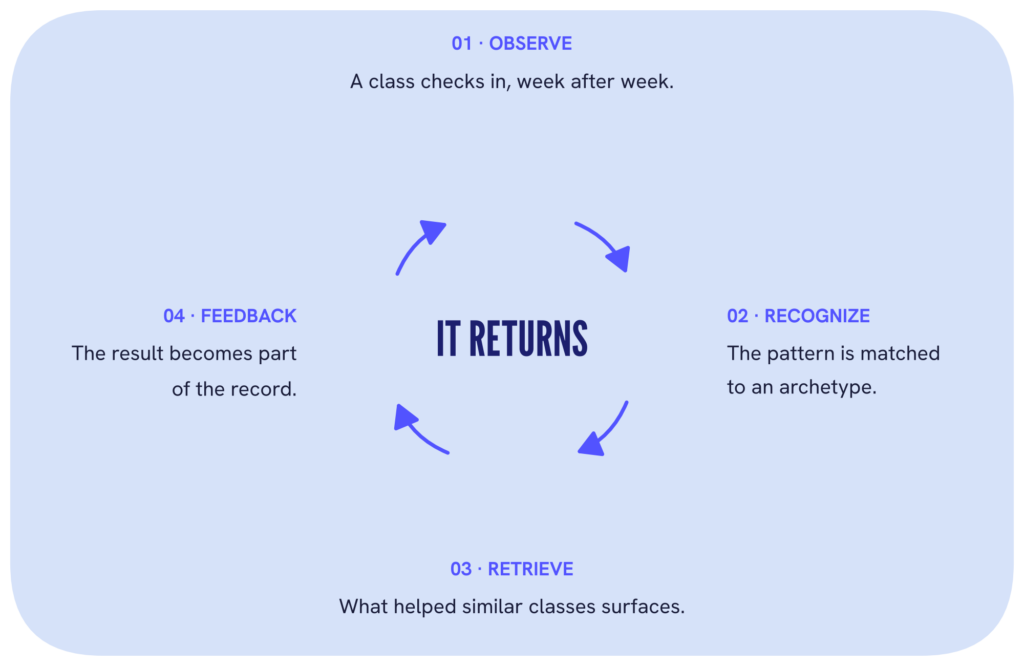
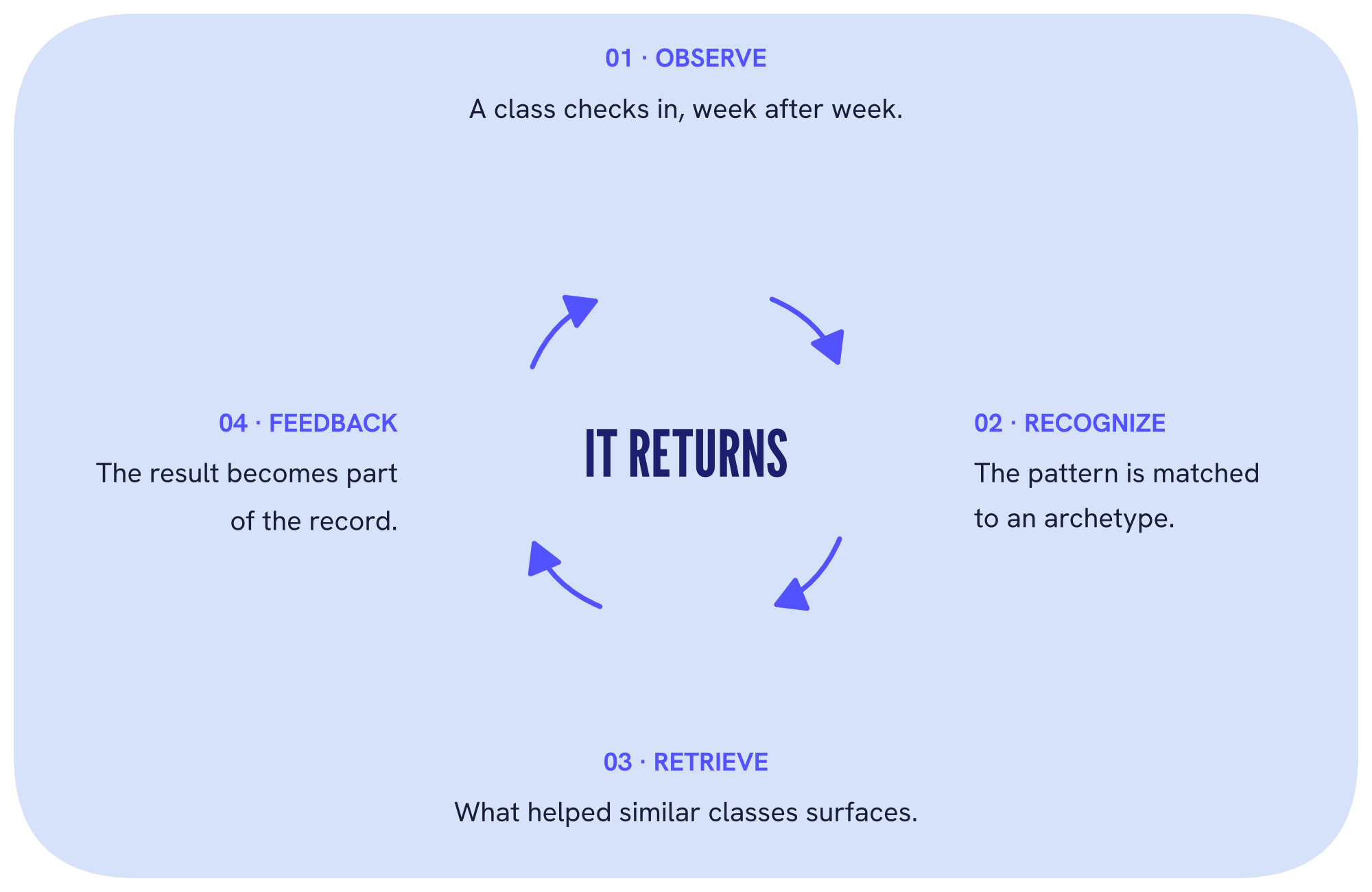
WOOF is creating what can be thought of as an educational neural network: an intelligence layer that learns from classrooms across the world and returns that collective experience to individual teachers.
Like a neural network in the brain, the value does not sit in any single node. It emerges from the connections. Each classroom contributes signals. Each interaction sharpens understanding. Each challenge, activity, and outcome becomes part of a larger pattern.
Over time, the system learns. It learns which approaches tend to work in which contexts. It surfaces patterns that would otherwise stay invisible. It points to practical solutions from educators who have already been where you are. And it makes that intelligence available where it matters most: inside the classroom.
The teacher remains at the center of the experience. But instead of working alone, they gain access to the experience of a global community.
The future of teaching is connected
The future of education is usually discussed in terms of technology, devices, platforms, or artificial intelligence. But the most important opportunity may be something simpler: connection.
The challenge is not that we lack educational expertise. The expertise already exists, scattered across millions of classrooms, disconnected from one another. The world’s teachers collectively represent one of humanity’s greatest repositories of practical knowledge. Every day, they generate insight that could help others teach more effectively and help students learn more successfully.
The next evolution of education is not creating more knowledge. It is connecting the knowledge we already have.
When classrooms become connected, experience becomes shared. When experience becomes shared, learning compounds. And when learning compounds, every teacher gains access to something far greater than their own expertise: the collective intelligence of education itself.