
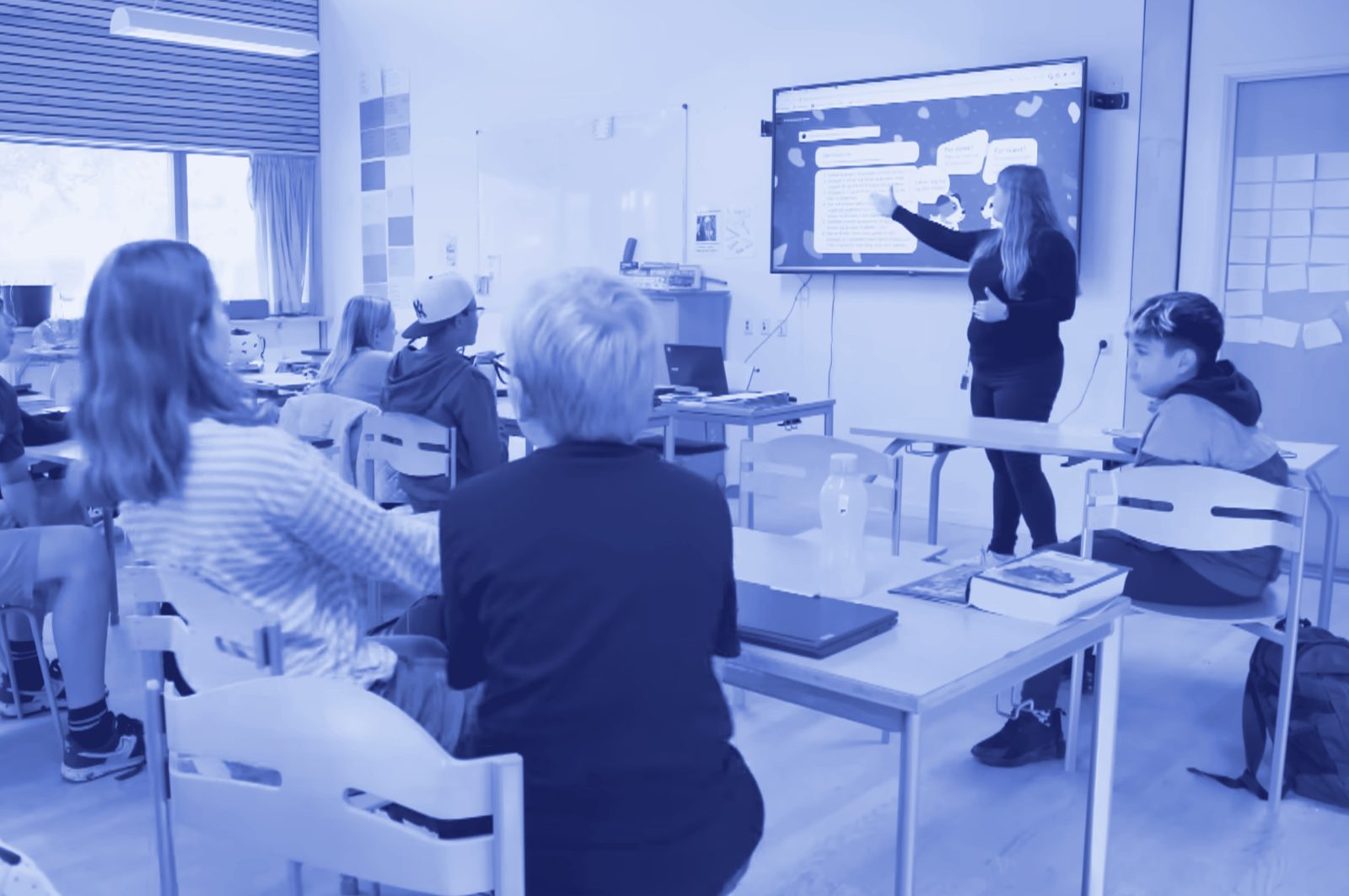
It’s Tuesday morning. Like most mornings, the class checks in with WOOF before the day gets going. It only takes a couple of minutes. Each student answers a few quick questions, anonymously about how they are feeling and why. The answers come together into a shared picture of how the class is doing as a whole, which the class looks at together on the classroom screen.
That’s the point of it. It’s not “how are you doing?”, it’s “how are we doing?”. On a daily basis it is a chance to take the pulse of the class’s readiness to learn.
It’s also a chance to build connections. When a class can see this picture together, something shifts. The mood in the room stops being something private to each student. It becomes something the whole class can see, talk about, and work on together.
The question
In this particular 7th-grade class, “Sleep” kept showing up as a low factor. The teacher didn’t just note it and move on. She asked the class: “It looks like sleep is one of our lows again. How about we do a course on sleep?”
What they saw, and what changed
The teacher clicks the “Sleep” course. It has three modules and is not a traditional curriculum where students learn about sleep. It facilitates a process where students take part in sharing experiences, learning from each other and coming up with strategies for the students to feel better about “Sleep”. Going through the first module, the class lands on three strategies: “Having a cup of tea before bedtime”, “Reading before going to bed” and “Putting away phones before bedtime”.
Building on the class initiative, the teacher also reached out to parents to share the strategies the class had agreed on and its collective commitment, helping build parental support and engagement.
Over the following weeks, the class continued its check-ins to track changes in “Sleep” and reflect on whether the strategies were being used, what was working, and what needed adjusting.
That kind of dialogue does three things. It gives students practice sharing and listening to each other and understanding themselves as a collective. It helps build strong and sincere student-teacher relationships. And the ongoing data keeps telling a story about what affects this specific class, and provides feedback when new initiatives are tried out.
During the conversations in class, the teacher gained a deeper understanding of students’ everyday experiences: what they worried about, how they tried to unwind in the evenings, and how late-night texting created pressure to respond. Students, in turn, gained a better understanding of each other’s experiences and how their own actions could affect their classmates.
Over the next weeks the class could see that fewer students chose “Sleep” as a negative impact on their mood, the overall mood level rose and the class created a Pattern Break: a positive development in data, not just one day, but a trend over several check-ins indicating a positive move for the class.
That’s the full loop: a signal in the data, dialogue and activities that build action and competence, and an ongoing data-based feedback loop to follow progress.
What this tells us
This is one class, one term, no control group. It illustrates the mechanism, it doesn’t prove it. But the pattern holds across teachers more broadly too. Those who engage deeply with the check-ins and activities see real movement. Those who engage shallowly see some. Those who never discuss the check-ins at all see almost none.
To us, that’s the clearest lesson here. The check-in itself doesn’t drive change in the classroom. The conversation, the student involvement, and the follow-through do.